
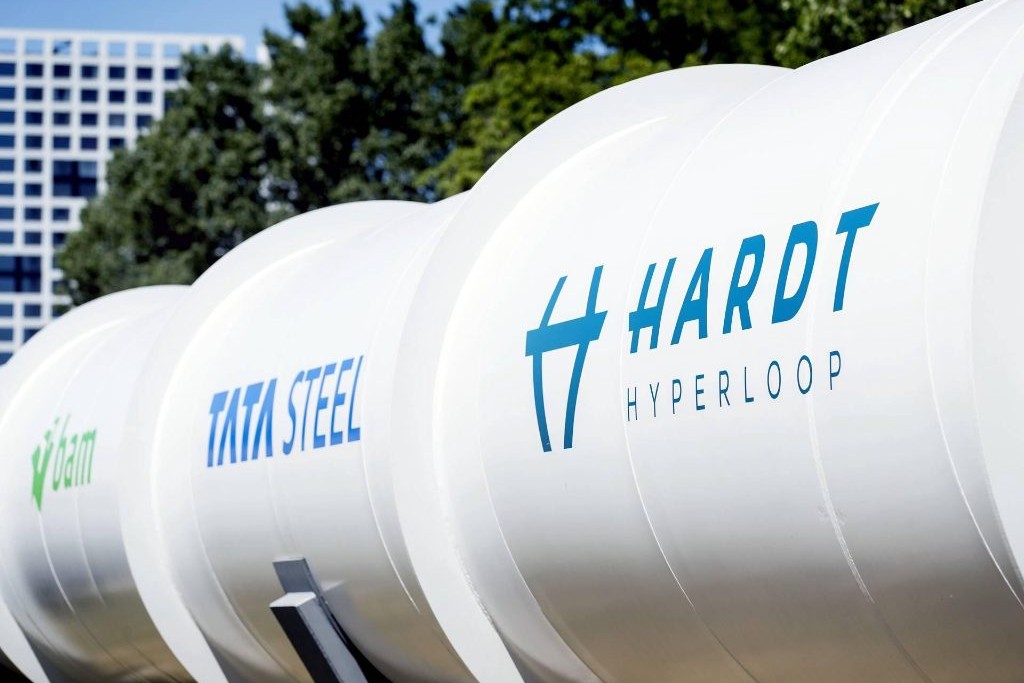
Green Rock, a US family office that has also invested in SpaceX, is putting a multi-million-euro sum into Hardt Hyperloop, the Rotterdam company that a court in The Hague declared bankrupt in March. Existing backers Perpetuum Ventures and Urban Impact Ventures are investing alongside it.
Credit: this report is based on a story first published by MenA.nl. Read the original at mena.nl.
According to MenA.nl, the hyperloop developer founded by students from TU Delft is getting a second life through a capital injection led by Green Rock. The company was declared bankrupt by the court in The Hague in March this year. Bits&Chips reported that Hardt ran into trouble as losses mounted and an expected European subsidy did not come through.
The restart is possible because the bankruptcy concerned an entity within Hardt Group, which continued to exist as the parent company, MenA.nl reported. The new capital is meant to secure the continuation of Hardt Group's activities.
The deal
Green Rock led the round, according to Bits&Chips. Existing investors and shareholders are also putting in money, among them Belgian investor Perpetuum Ventures and Dutch investor Urban Impact Ventures. Neither the amount invested by Green Rock nor the sums from the existing backers have been made public.
MenA.nl reported that Hardt has received investments and subsidies worth at least €37m since it was founded. The company also had a partnership with Schiphol.
Alongside the investment, Hardt and Green Rock have a separate agreement to develop hyperloop projects together across North, Central and South America. Bits&Chips noted that no concrete initiatives have been announced yet. Green Rock sees a concrete need for fast links between cities in the Americas and wants a technology partner that has built, tested and demonstrated its main systems, according to MenA.nl.
Where the technology stands
Hardt develops systems for magnetically levitated vehicles that travel through low-pressure tubes. At the 420-metre test track of the European Hyperloop Center in Veendam, it showed an unmanned vehicle running at 30 kilometres per hour in 2024, well below its eventual target of 700 kilometres per hour.
What comes next
The new money will go to technology development, preparing planned projects and developing new ones, Bits&Chips reported. Hardt also points to Germany as a possible early market: the German government has committed to a national hyperloop reference line, and Research Minister Dorothee Bär intends to make €100m available for it.
Original source: MenA.nl, "Amerikaanse investeerder laat failliet Hardt Hyperloop uit de as herrijzen" Additional source: Bits&Chips, "Hardt Hyperloop secures funding for restart after bankruptcy"