
LIOF, the regional development company of the Province of Limburg, has invested in Mosa.cloud, a Limburg technology company that wants to turn an open-source office suite built for the French government into a workplace that is ready to use within one hour.
Mosa.cloud brings email, calendar, video calling, chat, documents and file storage together in one integrated platform. LIOF announced the investment on 18 November and said the money is meant to speed up the company's commercial scale-up.
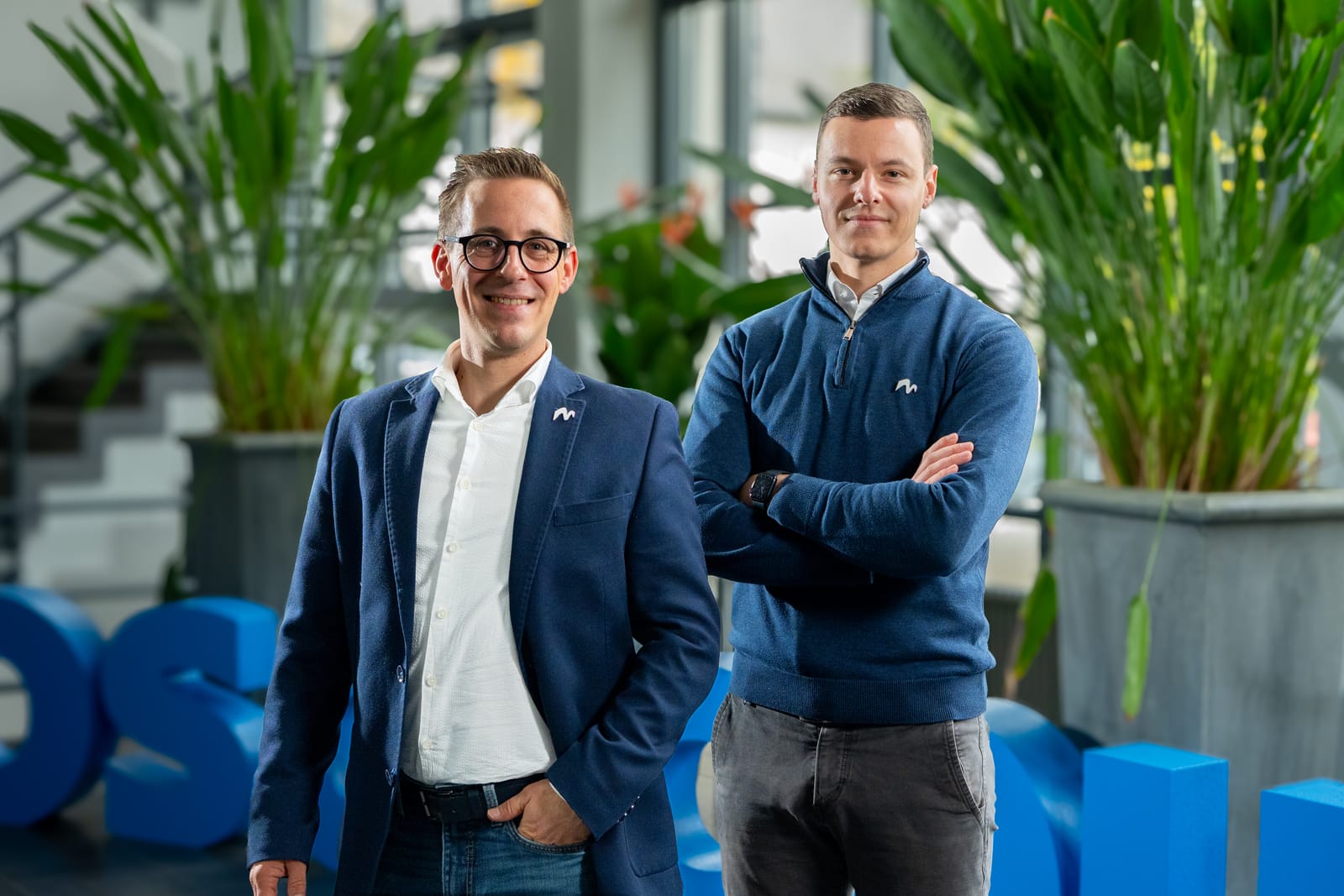
Behind Mosa.cloud are Riël Notermans and Niels Kersic. Notermans previously built Zzapps, which helped organisations move to and use Google services; Kersic brings the technical expertise, and the two developed the technology behind the platform together.
Built on La Suite
Mosa.cloud builds on La Suite numérique (La Suite), an open-source digital workplace that the French government develops together with Germany and the Netherlands, according to LIOF. Hundreds of thousands of French civil servants use La Suite every day. The software is freely available but was built for the French government's own infrastructure, so other organisations need a lot of technical knowledge to install and run it themselves.
Mosa.cloud's product is an extra software layer that simplifies set-up, integration and management, which the company says gets a digital workplace running within one hour. It also works on the applications themselves and uses AI in targeted ways, for example to sort an inbox with a simple rule written in plain language.
"We make that step simpler, for organisations and their IT service providers," Notermans said (translated from Dutch).
From pilots to sales
The company already has its first small and mid-sized business customers on the platform and works with partners that sell the product to their own clients. It is also running paid pilots with several organisations to test functionality, ease of use and fit in practice.
Its main market is SMEs, reached through resellers and IT service providers, while it also sees openings at governments and public and semi-public bodies. LIOF said the combination of an experienced founding team, a strong technology base and growing market demand made Mosa.cloud an interesting investment, according to Ralf Hendriks, who spoke on behalf of the agency.
With the investment and LIOF's network, Mosa.cloud aims to move from its first customers to commercial growth. It wants to become a European provider of digital workplaces for thousands of organisations in the coming years and plans to build a technical and commercial team in Limburg.
Original source: LIOF (press release), "LIOF investeert in Mosa.cloud voor Europees alternatief voor Microsoft 365 en Google Workspace"