
Three Dutch deeptech startups working on battery anodes, battery recycling and sugars made from wastewater will receive a combined €28.4m from the European Innovation Council (EIC) Accelerator in its second grant round of 2026, according to the Netherlands Enterprise Agency (RVO).
The three companies are LeydenJar, Back to Battery and Recell. RVO, the Dutch national contact point for Horizon Europe (the EU research and innovation programme that the EIC belongs to), announced the result and said its own Accelerator team advised the three on their applications.
According to TW.nl, the Dutch trio sits among 35 European companies selected in the latest round. Of 453 companies that submitted a full application, 88 were invited to an interview with the EIC jury before the final 35 were chosen, TW.nl reports.
The instrument
The money comes from a grant round, RVO says. TW.nl adds that the EIC Accelerator combines grants with possible equity investments: the European Commission expects to finalise the grant agreements within three months, while any investment from the EIC Fund is assessed separately.
The three companies
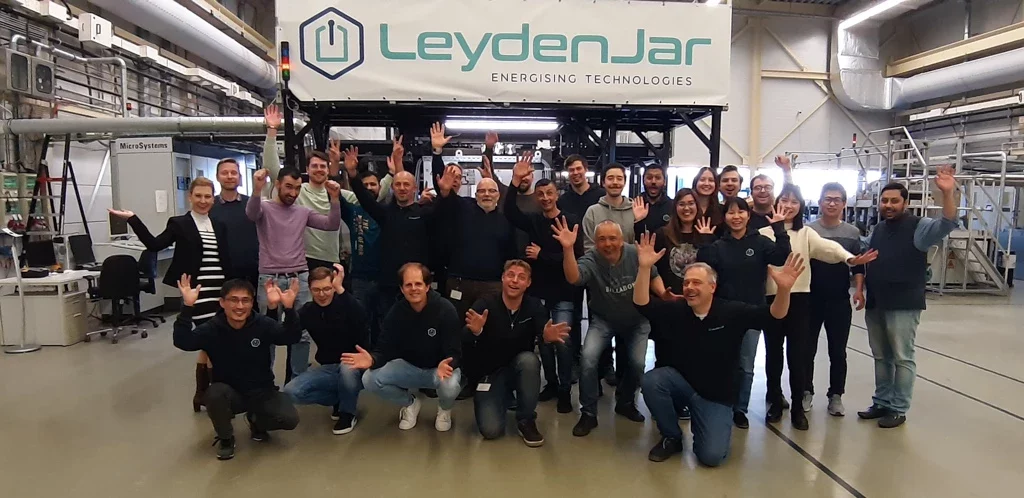
LeydenJar develops Silyte, a silicon anode. By arranging the silicon in a specific spatial structure, the company says the anode is ten times thinner without hurting battery performance, giving an energy density up to twice that of today's best batteries. RVO names portable electronics, smart devices and e-mobility as target uses.
Back to Battery recycles black mass, the powder left over when old batteries are shredded. That powder contains lithium, nickel, cobalt, manganese and graphite. The company recovers them with its own process in a closed loop, using as little energy and chemicals as possible, according to RVO.
Recell's technology, Cellforce, turns wastewater into high-grade industrial sugars that can go straight into biofuels, building materials and green chemicals. RVO says this avoids the competition for farmland that comes with using crops as feedstock.
The application process
RVO's advisers read along with the project proposals and rehearsed the jury interview with the three companies. Steven Lans, chief executive and founder of Back to Battery, told Duurzaam Ondernemen that an EIC Accelerator bid is a lot of work with an uncertain outcome. Now that it has succeeded, he said, "we can accelerate and make the battery materials of the future" (translated from Dutch).
What comes next
The next step is the signing of the grant agreements, which the Commission expects within three months, according to TW.nl. Any equity from the EIC Fund would follow its own assessment.
Original source: RVO, "€ 28,4 miljoen voor 3 Nederlandse start-ups uit het EIC Acceleratorprogramma" (press release) Additional sources: TW.nl, "Europa steekt 28,4 miljoen euro in Nederlandse batterijtechnologie en grondstoffen"; Duurzaam Ondernemen, "Nederlandse deeptech start-ups LeydenJar, Back to Battery en Recell ontvangen samen € 28,4 miljoen uit het EIC Acceleratorprogramma"