
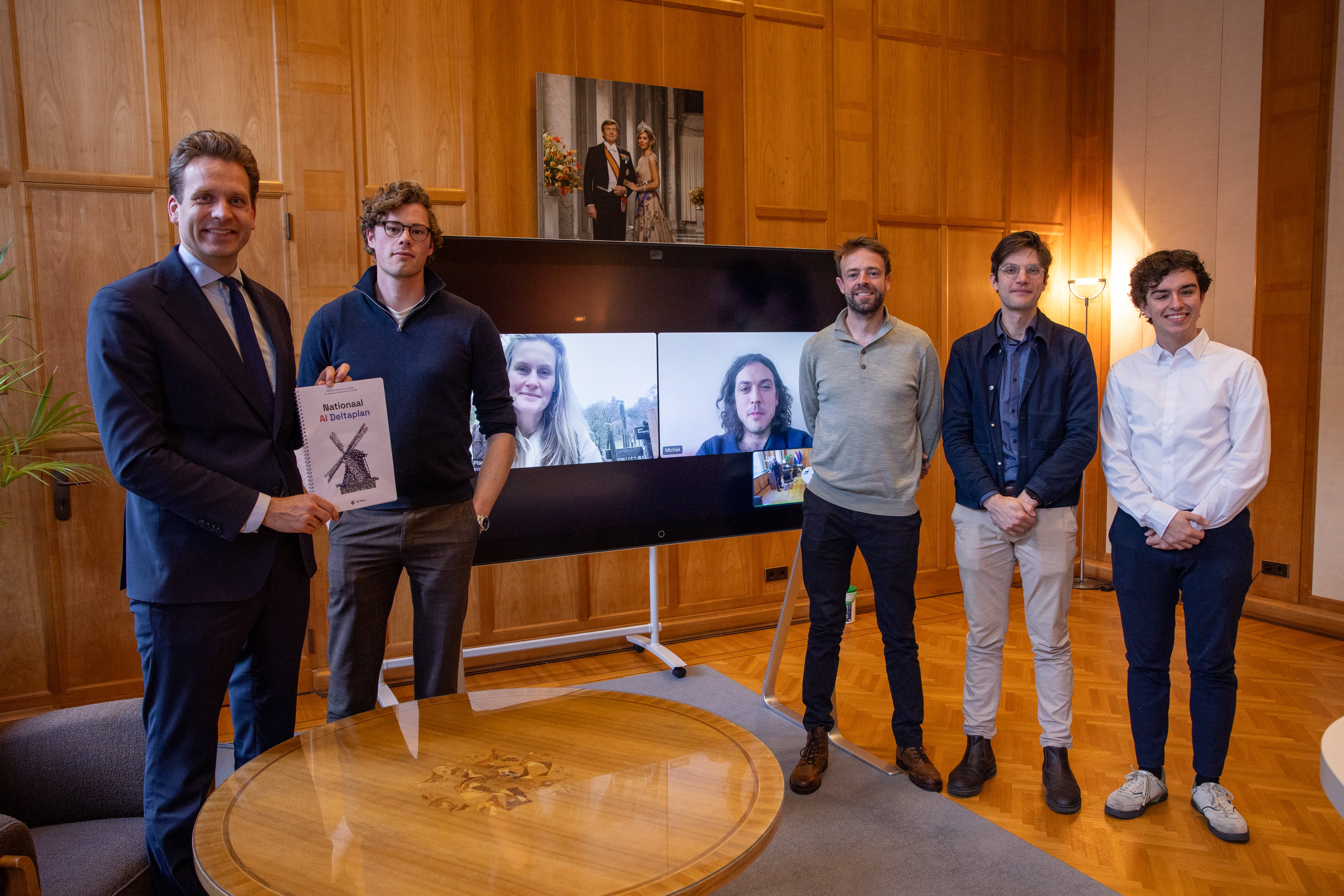
The Dutch cabinet's new AI strategy names two new bodies to help AI companies raise money and earmarks €120m, available from 2027, for Dutch participation in a European AI project.
Credit: this report is based on a story first published by IO+. Read the original at ioplus.nl.
According to IO+, the strategy, titled Choosing AI for Everyone, sets out how the government wants to make its own choices on AI and reduce its reliance on foreign tech giants. It was put forward by State Secretary Willemijn Aerdts, whose portfolio covers the digital economy and sovereignty. The cabinet approved the vision on her proposal, the government said in its announcement of 6 November.
The capital angle
To help growing technology companies raise money, the government points to two new bodies, the National Agency for Disruptive Innovation (NADI) and the National Investment Institution (NII), IO+ reported. Both are meant to improve access to finance for Dutch AI companies.
The government's own announcement lists talent, capital, data, enough computing power and clear, workable rules as what Dutch AI companies need to grow more easily.
The €120m is intended to help develop new technologies and infrastructure and to strengthen the Dutch and European AI value chain, according to IO+. DutchNews.nl reported that it is the only funding figure in the vision and that the money had already been set aside in September. The letter says more targeted and structural investment is needed in infrastructure, talent and research but gives no amounts, DutchNews.nl added. Volt leader Laurens Dassen told broadcaster NOS: "This is a toothless tiger," DutchNews.nl reported.
Compute, sectors and procurement
In early 2027 the government will set out how much computing power the Netherlands needs, together with a plan for the Dutch AI factory in Groningen, IO+ reported. That initiative is meant to give businesses, researchers and public bodies access to high-performance computing.
The strategy picks five sectors where economic opportunities and societal challenges overlap: healthcare, energy, food production, security and high tech. It calls ASML a "unique asset in the global AI stack".
Other measures concern how the state builds and buys AI. The government is developing a digital marketplace for validated AI applications and reusable components, wants AI tools that worked well in government rolled out more widely, and plans more joint procurement to share development costs. It also wants to remove barriers that keep small and medium-sized businesses from adopting AI.
What comes next
The cabinet is looking into setting up a Dutch AI safety institute, with an advisory report due in December, according to DutchNews.nl. Members of the public will be able to have their say on the opportunities and limits of AI in 2027 and 2028, IO+ reported.
Original source: IO+, "Dutch government charts its own AI course with €120 million" Additional sources: DutchNews.nl, "Cabinet sets out AI plan, seeks partners beyond US and China"; Rijksoverheid (press release), "Kabinet kiest voor AI die Nederland vooruithelpt"