
Amsterdam-based Return has secured €835m in portfolio financing underwritten by Deutsche Bank and Rabobank, money that backs a plan to install at least 1 GW of battery storage a year in Germany from 2027.
Credit: this report is based on a story first published by EU-Startups. Read the original at eu-startups.com.
According to EU-Startups, Return, which develops, owns and operates large-scale battery storage and sells energy flexibility services, has closed an €835m portfolio financing. Deutsche Bank and Rabobank underwrote the facility.
The company was founded in 2021 by Willem-Jan Schutte, its CEO, and Daniel Witvoet, its CFO, and is headquartered in Amsterdam. Schutte previously co-founded solar energy company Sunrock. Return is active in the Netherlands, Belgium, Germany and Spain.
The deal
The facility follows a €300m growth-equity investment Return took in 2025. Deutsche Bank says the new structure is designed to meet the capital expenditure needs of Return's German battery project pipeline.
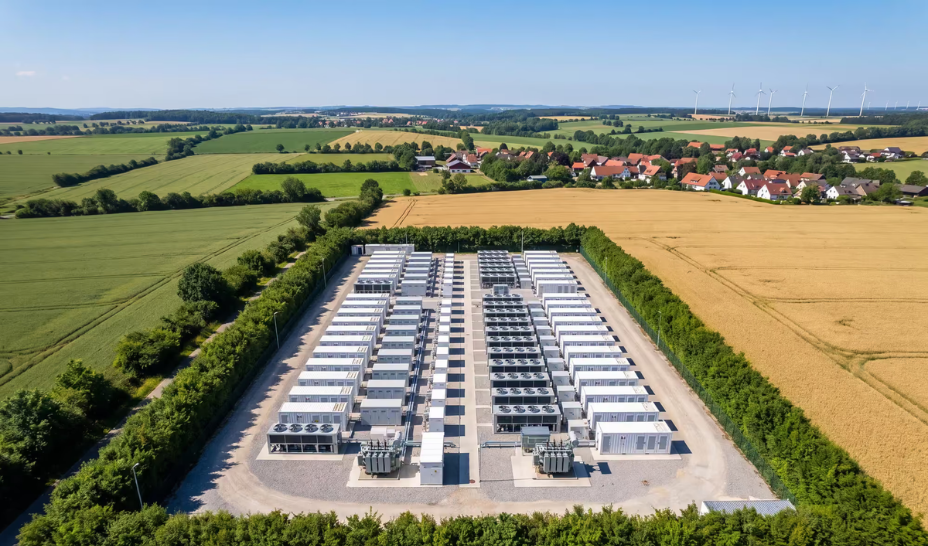
The initial framework covers three German battery storage projects with a combined capacity of 117 MW. From 2027, Return plans to invest between €750m and €1.2bn a year in German battery storage projects, depending on market conditions, with a target of at least 1 GW of new capacity annually.
Dominik Thumfart, head of infrastructure and energy origination at Deutsche Bank, described the facility as "a financing structure built to scale". Marc Schmitz, head of project finance Europe at Rabobank, said the bank is combining advisory, underwriting, project finance and hedging work to support the expansion.
Contracts behind the pipeline
Return has signed several commercial agreements in Germany ahead of the financing. ENGIE recently expanded its partnership with the company to 400 MW of contracted battery flexibility, and Centrica Energy signed a separate deal covering 100 MW. Outside Germany, Return works with Vattenfall, Essent and Eneco.
The German structure builds on a model Return has already used at home. Earlier in 2026, its Sirius battery storage project in the Netherlands reached financial close under a wider framework covering several storage developments.
The new arrangement links financing for physical batteries with Return's Virtual Flexibility Portfolio, a platform that pools capacity from several facilities into one virtual portfolio so energy companies can buy flexible storage without managing individual assets.
What comes next
Return has an active development portfolio of more than 8 GW and aims to deliver more than 5 GW of battery storage capacity by 2030. Germany is the next step in that plan, as the country adds more wind and solar power to its grid.
Original source: EU-Startups, "Return secures €835 million financing to expand battery storage capacity in Germany"